
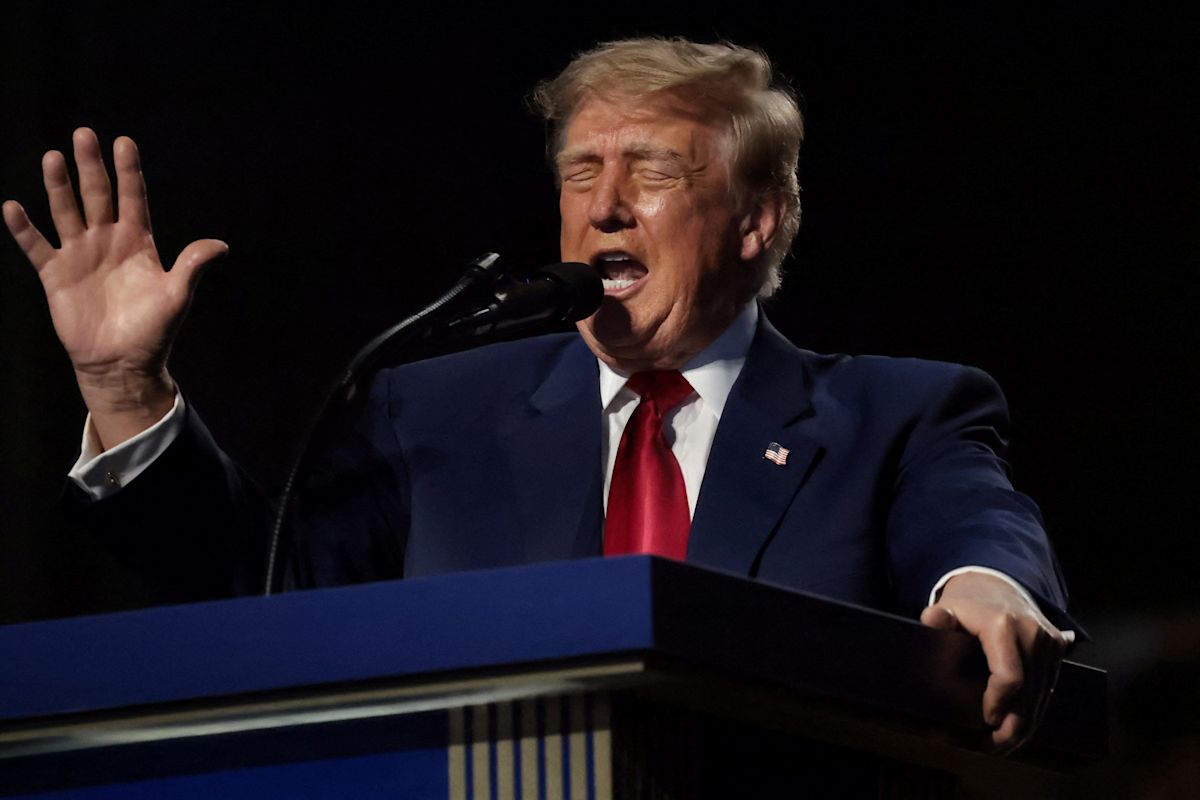
President Donald Trump has introduced a high-stakes financial proposal on the campaign trail, pledging to distribute a $5,000 dividend payment to every adult citizen across the United States. The sizable direct payment, however, carries a significant political contingency: the Republican Party must secure full control of both the House of Representatives and the Senate in the upcoming midterm elections scheduled for November 3.
The proposal was first unveiled during a campaign address delivered in Dallas on September 9. Following the appearance, the White House issued an official press release elaborating on the administration's vision, asserting that the revenue necessary to back the massive payouts would stem from broad economic momentum. The administration credited this financial strength to the mobilization of trillions of dollars in private investments alongside sweeping efforts to curtail wasteful federal expenditures.
Despite the administration's optimistic outlook, fiscal policy analysts have sounded alarms regarding the staggering price tag attached to universal payouts of this scale. Calculations from the Committee for a Responsible Federal Budget indicate that distributing $5,000 checks to every eligible American adult would demand roughly $1.2 trillion in federal outlays. Such an unprecedented cash injection, policy specialists warn, could significantly widen the national debt and trigger fresh inflationary pressures across the domestic economy.
To illustrate the sheer scale of the proposal, budget watchdogs noted that the $1.2 trillion commitment would exceed the total expenditure of all three rounds of emergency stimulus relief distributed during the COVID-19 pandemic combined. Furthermore, the estimated cost surpasses the projected annual outlay for the administration's signature legislative achievement, known as the One Big Beautiful Bill Act, while eclipsing the nation's projected primary deficit for 2027 by approximately 50 percent.
Beyond the raw budgetary numbers, the path to enacting such a proposal faces substantial legislative obstacles. The executive branch lacks the unilateral authority to disburse funds at this volume without explicit authorization from Congress. Securing formal legislative approval from lawmakers would likely involve prolonged negotiations on Capitol Hill, potentially delaying any actual check distribution by several months even under unified Republican control.
Furthermore, any resulting statutory framework could encounter serious judicial hurdles. Independent legal analysts and political observers note that the initiative could easily attract lawsuits and face scrutiny before the Supreme Court, echoing the constitutional roadblocks that have stymied previous executive-led financial proposals.
Skepticism surrounding the current $5,000 pledge is partly informed by the administration's track record with similar direct-payment promises that failed to materialize. In early 2025, the administration teased a $5,000 stimulus check that was supposed to be funded through operational savings uncovered by the Department of Government Efficiency. That agency, established under the leadership of tech executive Elon Musk, aimed to drastically downsize bureaucratic operations.
However, the promised efficiency-backed disbursements were never sent to the public. The Department of Government Efficiency struggled to translate its cost-cutting goals into direct household payments, and the entire entity was ultimately disbanded earlier this year, leaving the proposed stimulus unfulfilled.
A comparable dynamic played out toward the end of 2025, when the president proposed distributing $2,000 relief checks to American households. That plan was intended to soften the financial impact on consumers resulting from broad-based import duties imposed on virtually all foreign trading partners. The proposed checks were explicitly designed to be financed directly through the proceeds generated by those aggressive trade tariffs.
That initiative collapsed after facing immediate legal challenges regarding executive authority over trade taxation. The Supreme Court ultimately struck down the nationwide tariff framework as unconstitutional, effectively eliminating the designated revenue source and extinguishing the prospect of the $2,000 payments reaching taxpayer mailboxes.
Notwithstanding these past setbacks, proponents point out that the administration has successfully navigated the federal apparatus to deliver targeted financial payouts on other occasions. In December 2025, active military personnel received special holiday payments branded as the $1,776 "Warrior Dividend." While the administration initially suggested these bonuses would be funded through international tariff collections, the disbursements were ultimately executed using military housing funds previously appropriated by Congress under the One Big Beautiful Bill legislation.
The administration has also overseen the rollout of specialized youth savings programs known as "Trump Accounts." Under this initiative, the federal government contributes an initial deposit of $1,000 into dedicated investment accounts set up for children born between 2025 and 2028. According to official figures released in early July, approximately 6 million children had been enrolled in these accounts to provide them with early financial footing.
While these targeted initiatives prove that specific payment structures can be realized with congressional backing, the universal $5,000 dividend represents a far more ambitious and fiscally burdensome commitment. Lawmakers from both major political parties, alongside leading budget analysts, remain doubtful that an expenditure of this magnitude can successfully overcome both the legislative process and economic headwinds.
As the November midterm elections approach, the proposed $5,000 payout stands as a central pillar of the administration's electoral platform. Whether American voters will ever receive the promised funds remains largely dependent on the outcome of the congressional races, the appetite of future lawmakers to authorize more than a trillion dollars in new spending, and the proposal's ability to survive inevitable legal challenges.







(0)