
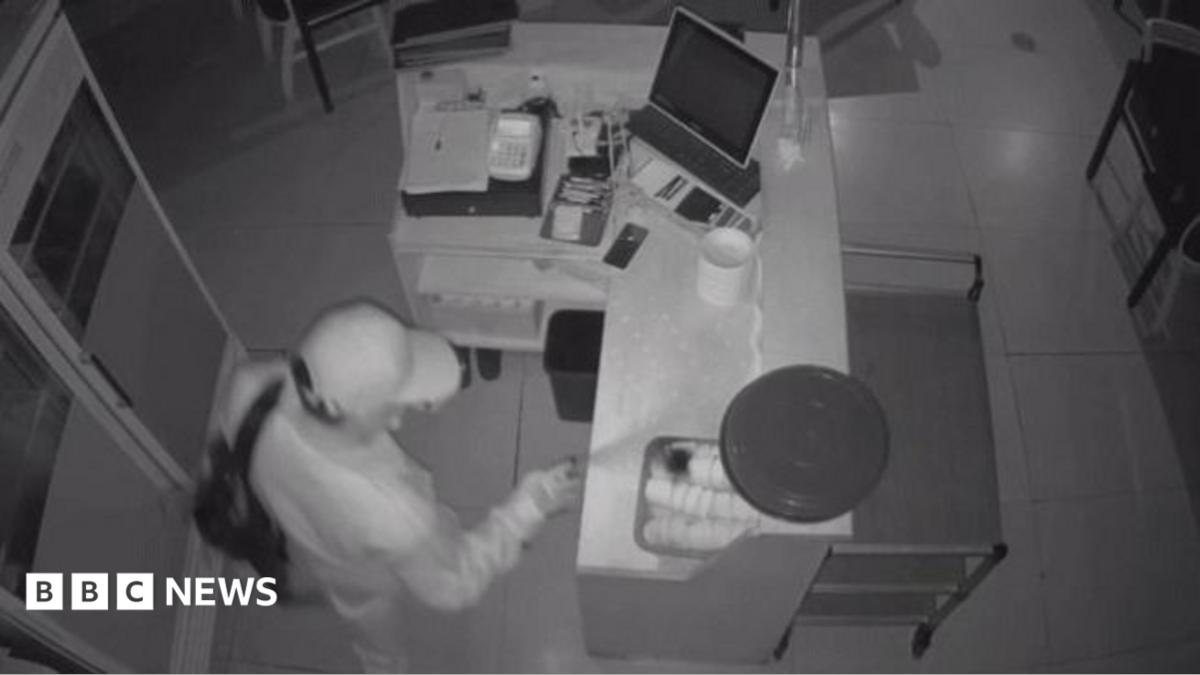
A restaurant in South Korea that took its name from Chinese President Xi Jinping has been ransacked by a group of Chinese nationals who are believed to have fled the country immediately after the incident, according to police.
CCTV footage captured at the eatery in Seongnam, a satellite city located just south of the capital Seoul, shows four masked individuals forcing their way into the premises in the early hours of 24 September before destroying furniture and spraying lacquer across the interior, police said.
The owner of the establishment, who has not been publicly named, told South Korean media that he had settled on the name Xi Jinping purely for commercial reasons, saying he "wanted it to be the best Chinese restaurant in South Korea." He was also at pains to stress that the choice carried no political meaning whatsoever.
Although the restaurant has operated for eight years, it only began attracting demands for a name change within the past year, according to a report by The Chosun Daily. The owner said the pressure intensified in August last year, when news emerged that the Chinese leader would be travelling to South Korea for the Asia-Pacific Economic Co-operation Summit, an event bringing together leaders from across the region.
At that point, the restaurateur said he received dozens of telephone calls from people urging him to drop the name. Some callers went further, offering him money to do so. "People claiming to run businesses in China proposed large sums if we changed the name," he told The Chosun Daily, describing the approaches as persistent.
The pressure did not remain confined to phone calls. In April this year, an unnamed individual lodged a complaint with South Korea's Ministry of Intellectual Property concerning a menu item called Xi Jinping Special Rice. The ministry ultimately closed the case after determining that there was no issue with the dish or its name, leaving the restaurant free to continue trading under its existing branding.
The owner described last week's raid as the most serious act of vandalism he has faced over the past year. He told local media that the damage caused by the intruders amounted to roughly 15 million won, the equivalent of about $11,100 or £8,400. The incident forced the restaurant to shut its doors for five days, and it only resumed serving customers on Tuesday. The owner now says his team is considering adopting a new name for the business.
Police provided further detail on Tuesday, stating that the four suspects are Chinese men aged between 20 and 40. Investigators believe the group left South Korea shortly after carrying out the attack, heading to Shanghai and Yantai, a coastal city in China's Shandong province. Authorities say they intend to seek red notices from Interpol in relation to the four men.
Such notices are not international arrest warrants. Rather, they function as requests to law enforcement agencies around the world to locate and detain a wanted individual on a provisional basis, pending the possibility of extradition. The procedure is often used when suspects are believed to have crossed international borders.
The restaurant, which serves a broad selection of Chinese dishes while also offering some South Korean options, has maintained a reasonably solid reputation online. Screenshots circulated on social media indicate that Google reviewers have awarded it an average rating of four out of five stars, a sign that its troubles have not dented its standing among ordinary diners.
The case highlights the sensitivities that can arise when politically charged symbols are used in commercial settings, particularly in a country like South Korea that maintains complex and often delicate ties with its large neighbour China. While the restaurant's owner insists his decision was driven by marketing rather than politics, the reactions he described suggest that some individuals viewed the name as an affront or an act of appropriation.
It also raises questions about cross-border accountability. Even with Interpol red notices in play, securing the detention and extradition of suspects who have returned to their home country can prove a lengthy and uncertain process, especially in cases involving nationals of a major power.
For now, the immediate focus lies on the restaurant's recovery. After five days of closure, the establishment is trading again, though its future identity remains in flux. The owner's apparent willingness to change the name may signal an effort to draw a line under a year of mounting pressure and a violent episode that has left him weighing the cost of a decision he insists was never intended as a political statement.







(0)