
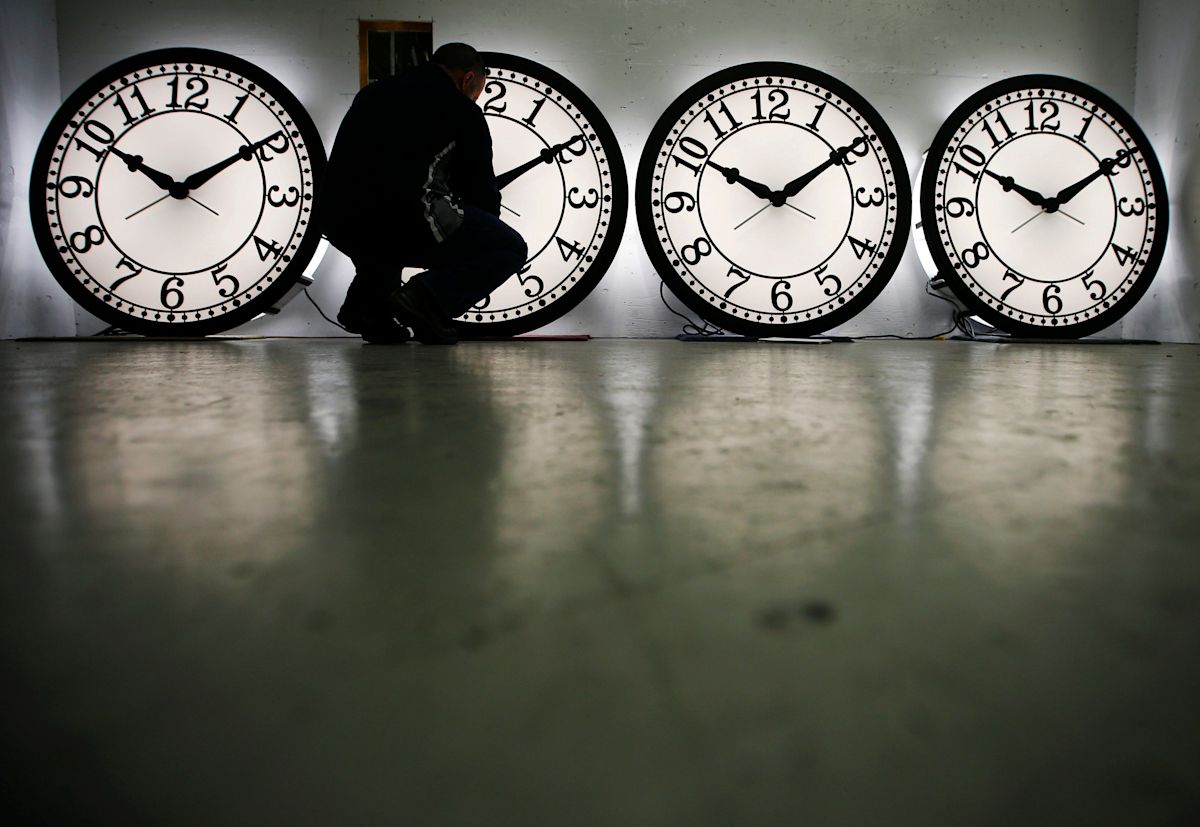
As autumn approaches, millions of Americans are preparing for the familiar routine of adjusting their clocks. The current daylight saving time period is scheduled to conclude on November 1, when clocks across much of the United States will be turned back one hour, moving from 2:00 a.m. to 1:00 a.m. This seasonal adjustment marks the return to standard time, prompting households across the nation to adapt to earlier darkness and shifted daily schedules.
For the majority of modern households, part of this transition will take place automatically without the need for manual adjustments. Digital electronics that connect to the internet, including smartphones, tablets, and personal computers, are designed to update their internal clocks on their own overnight. However, manual updates will still be required for standalone household items, such as wall clocks, kitchen appliances, and in-vehicle dashboard displays.
The autumn time change brings an immediate practical outcome for most people by offering an extra hour of rest. The widely recognized phrase "fall back" describes this additional hour of sleep gained during the transition. By contrast, the springtime shift known as "spring forward" causes people to lose an hour of sleep, which is done to provide later sunrises and sunsets through the summer months until autumn arrives.
Across the United States, states such as Mississippi, located within the Central time zone, continue to observe daylight saving time in accordance with current standards. Residents in Mississippi and other participating states will follow the upcoming November schedule, turning their clocks back as required by federal law unless legislative changes are formally enacted by Congress.
Despite the routine nature of these biannual adjustments, there is an active national conversation surrounding whether the system should be eliminated entirely. Legislative measures currently introduced in Congress propose different solutions to address the clock changes, ranging from making daylight saving time a permanent year-round standard to granting individual states the authority to determine their own participation.
Among the prominent public figures calling for an end to the biannual shift is President Donald Trump, who has repeatedly criticized the practice. In a post published on Truth Social on August 4, Trump described the twice-a-year clock changes as foolish, inconvenient, and in certain situations, very costly. He emphasized that citizens are tired of the disruptions that accompany altering their timepieces every spring and autumn.
Trump has publicly advocated for establishing permanent daylight saving time, arguing that keeping the clocks unchanged year-round would yield significant societal benefits. According to Trump, adopting permanent daylight saving time would help decrease vehicular collisions, lower crime rates, conserve energy, and offer families more usable daylight during the evening hours. In his online remarks, he urged lawmakers to pass the Sunshine Protection Act quickly, suggesting the nation should leave the time as it currently stands and avoid future changes.
On Capitol Hill, legislative action on the issue has seen mixed progress. The Sunshine Protection Act, which aims to permanently institute daylight saving time across the country, has already secured approval in the House of Representatives. However, the measure's path forward remains uncertain in the Senate, where formal action has yet to occur.
Members of the Senate returned from a five-week recess on September 14 without scheduling a vote on the legislation, despite Trump's calls for senators to act promptly on the bill. Because the authority to modify daylight saving regulations belongs exclusively to Congress, the public must continue adhering to the standard biannual adjustments until the proposal is passed by both chambers and signed into law.
Adopting daylight saving time permanently would not increase the overall amount of sunlight the country receives each day. Instead, a permanent shift would redistribute those daylight hours, making sunrises and sunsets occur approximately one hour later than they normally do under standard time. This time shift remains a central point of discussion among policymakers and the public.
Supporters of maintaining daylight saving time point to the economic and lifestyle benefits associated with lighter evenings. Proponents assert that extending daylight further into the evening hours helps cut down on energy costs and provides people with more daylight to participate in outdoor activities and daily routines during the warmer months of the year.
On the other hand, health and sleep specialists have expressed strong reservations regarding the physical impact of changing the clocks twice every year. Many experts argue that the biannual shifts disrupt the body's natural circadian rhythms, which function as an internal biological clock that regulates human sleep patterns and various other essential biological functions.
Emphasizing these biological concerns, Erik Herzog, a professor of biology and neuroscience at Washington University in St. Louis and a former president of the Society for Research on Biological Rhythms, has indicated that permanent standard time would be the healthiest choice for the human body. Herzog explained that changing the clocks interferes with circadian rhythms, noting that the springtime shift is particularly stressful for the body and has been connected to higher rates of car crashes and heart attacks.
The concept of keeping a single time system throughout the entire year is not entirely new to the country. The United States previously adopted permanent daylight saving time back in 1974, giving historical context to the modern policy debate. As lawmakers and health experts continue to weigh the pros and cons of altering federal time regulations, Americans must still prepare to turn their clocks back one hour on November 1.









(0)